
Living on a rural gulf island for over 20 years has required a few extra preparations for more frequent power outages, and the possibility of earthquakes and wildfires. Thankfully I’ve only felt one earthquake in that time, and wildfires have been quickly managed by our wonderful local fire fighters. I have a few new neighbours that have moved here from out of province, so thought I would try to consolidate the key things to prepare as winter storms start hitting this time of year. Plus it’s a good way to check we are ready too!
This info is specific for a no-generator household and what we do ourselves. If you operate a generator, feel free to leave your tips and advice in the comments. There’s a lot of different options for everything here, but they can all be searched online quite easily, so I won’t waste space listing them all.
Things to do first when a storm is coming:
- Take a shower
- Make a hot meal that’s easy to reheat (like soup or stew) and a cup of tea or coffee
- Plug in and fully charge all the back up power banks, phones, iPads, and laptops
- Bring in well seasoned firewood and kindling
- Fill a bucket with water for flushing the toilet
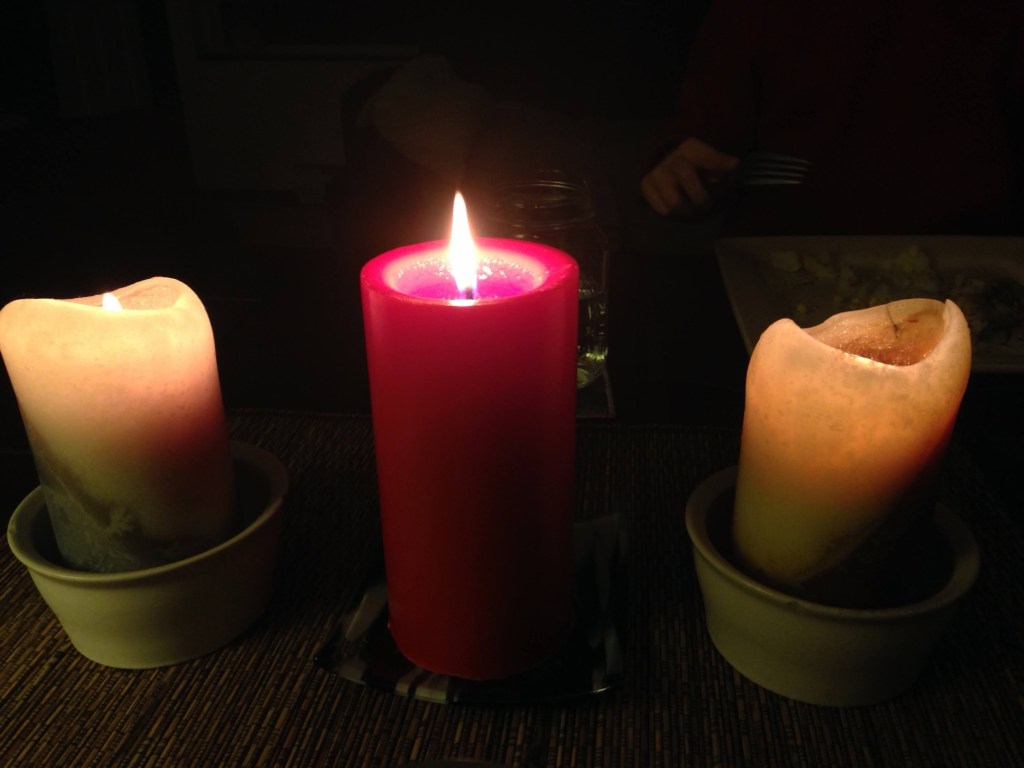
- Check lanterns and headlamps are either charged or have fresh batteries. Get out candles and lighters.
In no particular order:
Water:
- Source – we have no well (pumps don’t work during power outages anyway), and our household of two manages well with two 2200 gallon cisterns that collect rainwater off our metal roof. After a very dry spring, summer and fall, they got very low this year, but thankfully the rains finally returned, and they are refilling quickly now. We get the cisterns and our roof cleaned every other year, and keep our gutters cleaned weekly while the leaves are falling. In the spring when the pollen flies we use a diverter to keep it out of the cisterns, as pollen can cause really stinky water. We installed a non-electric water gauge on the top that uses a simple floater device, again, “smart” apps are not helpful in a power outage.
- Drinking water – We chose a Berkey water filterer because it’s very low tech and doesn’t require an app or power to operate. It’s manually cleaned on a regular basis. Before investing in the Berkey we kept a few large containers of drinking water on hand, and alternated them on a drinking water stand so they never expired and were always fresh. We still keep a few smaller water jugs filled in our cupboard for quick access/back up.
- Grey water – when the power goes out the water pump no longer operates so we have no access to a shower, flushing toilet, or tap water. There’s a spout on our water cisterns that we can fill buckets with, and use that to manually flush the toilet and replenish our countertop Berkey tank if it runs low during a power outage. When a storm is forecast, we take showers right away and wash up any dishes. If the power lasts more than a few days and we get desperate, we have family in town that lets us borrow their shower, or if we are unable to leave, sponge baths with heated water on the wood stove does the job.
Power and Communication:
- I’ve invested in a few wireless battery pack chargers that I keep fully charged. One pack will recharge the phones a few times, and I have resorted to using my laptop to recharge my phone on longer outages when those are fully depleted. We get very patchy cell coverage, particularly when everyone is trying to use it at the same time during an outage, but can usually contort myself enough to find a bar or two to get access to the local online community pages to see what’s going on locally (my fave is the Canadian app, Hey Cafe), and contact the utilities to get updates on power restoration predictions. Otherwise, it’s a screen free holiday!
Food & Cooking
- We do a big grocery and supply shop every two weeks, so we always have at least 2 weeks worth of groceries in our pantry, fridge, and freezer. We keep extra dry goods like beans, lentils, and pasta in stock, plus at least 4 cans each of the various beans, chili, lentils, etc that we eat regularly. We are primarily vegetarian, so we don’t have to worry about losing a freezer full of meat.
- Refrigeration: Save and fill a few large plastic jugs with water and keep them in the freezer year round. When the power goes out we use the fridge and freezer like a cooler, and pack perishables around the ice jugs on the lower shelves (heat rises). This can give you a good 2-3 bonus days of refrigeration.
- Cooking: We have a butane camping stove, with extra canisters of fuel on hand, for heating meals and boiling water for coffee and tea. We set it up on the kitchen counter in front of an open window for ventilation, or if the weather is nice we put it on a table outside. We can also use the top of our woodstove once it’s heated up, if necessary.
Entertainment:
- I have an extensive library of my favourite books, plus a few I haven’t read yet, and I have a rechargeable reading light that fits comfortably around my neck. I also keep many audio and kindle books downloaded on my phone, which uses surprisingly little power, but tend to use that sparingly so I don’t run my batteries down. When our son was young we had board games and playing cards to wile away long winter days and dark evenings.
Transportation:
- We never let our car fuel get below half a tank. Often power outages come with downed trees here, so it’s good to have a back up plan if you need to walk out. We bought a wagon so we can put our cat in his carrier and transport him and our 72 hour emergency bags in dire straits. See evacuation plan below for further details on meet up points, etc.
Light & Heat:
- We each have a headlamp for after dark. Candles are nice for ambience, but don’t shed a lot of light, and aren’t the safest option. We have a high-light battery operated lantern to use in the bathroom and kitchen. There’s a lot of great rechargeable motion lights available now that we keep in closets and over the bookshelves – they work great for short amounts of use (they don’t hold their charge more than a few hours of continuous use). We have solar powered motion lights outside too.
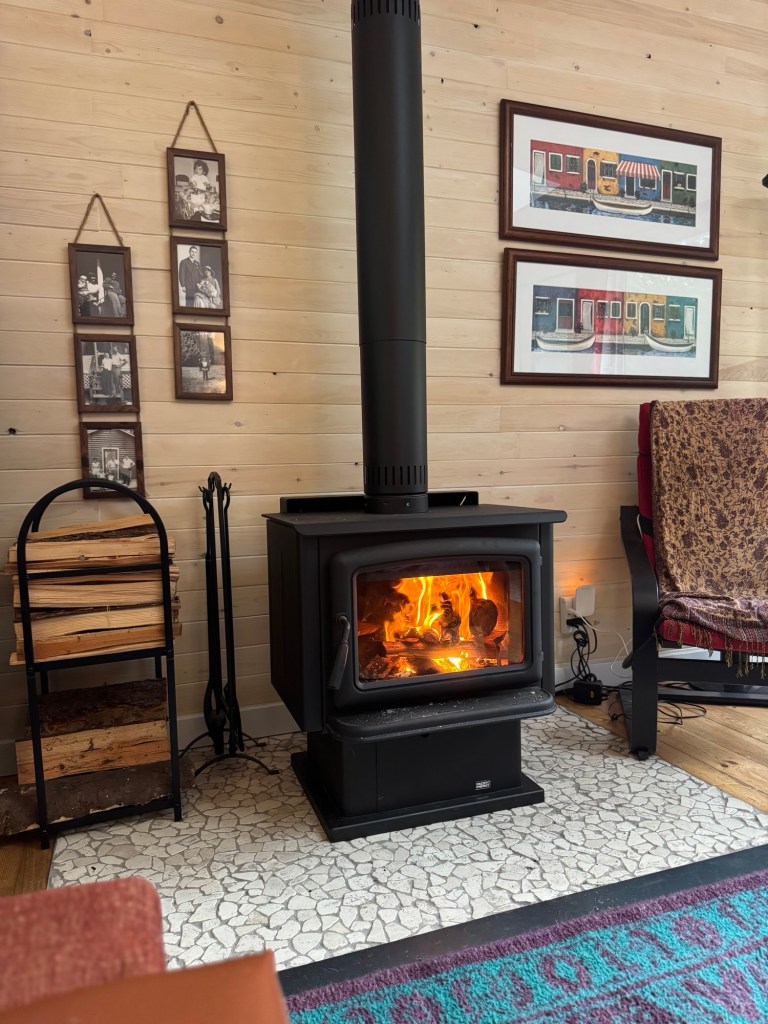
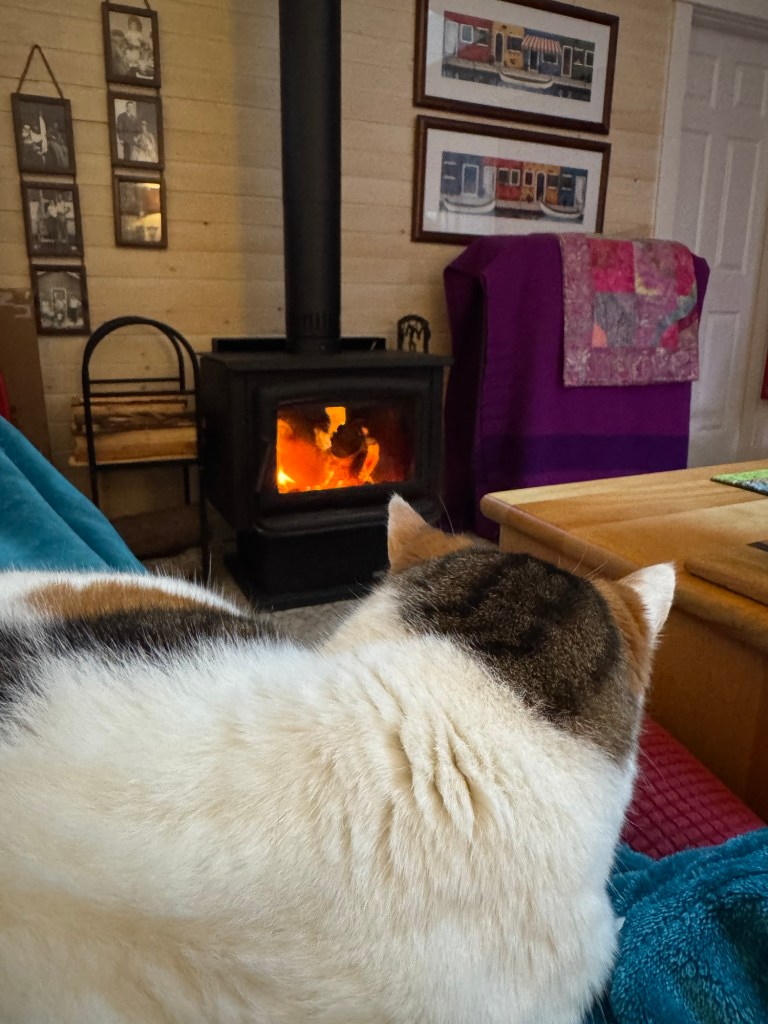
- We have a WETT certified woodstove, and keep kindling and a full lighter on hand. We collect firewood from fallen and pruned trees on our property, and keep it in a woodshed away from the house to dry out and season well over the dry summers. We usually only use it for power outages, so have never had an issue with supply. Cozy blankets and a furry companion to snuggle are also highly recommended!
Evacuation Prep:
- In addition to power outages, we also live in an area at high risk for wildfires and earthquakes. We have two 72 hour emergency supply bags that are checked, and restocked as needed, every year. We keep one in the house and one in the car year round. You can find premade ones online that cover everything you need to stay alive in dire straits (in addition to the emergency preparation we do at home).
- There are a lot of evacuation resources regionally available in most communities that can be found with a simple online search. We keep a laminated printed evacuation plan personalized for ourselves on our fridge, and one at work. It outlines exactly what to do so we are in contact quickly, and are both going to the same place to meet up. We check the info is still current, and update it annually if needed. Here’s a BC Canada emergency plan site that has lots of great info to get you started.

